It all started when I bumped into a box of Dubai-style Cannoli in a discount store, which was synonymous with a death sentence for tradition. I stood there, looking at the foil packaging, and understood that this isn’t just a dessert. It is a virus.
Today, “Dubai green” infects everything. It is a pandemic that spares no geographical latitude. The virus mutated and attacked:
- 🇫🇷 In France, the sanctity of the buttery croissant was profaned by drowning it in knafeh paste.
- 🇺🇸 In the USA, donuts and cheesecakes ceased to be New York-style; they became “Dubai-style”.
- 🇪🇸 In Spain, Christmas was struck, where the traditional Turrón (nougat) is losing to a block of pistachio chocolate.
- 🇩🇪 In Berlin, donuts (“Dubai-Berliner”), instead of jam, are being “tanked” with the most expensive cream in the world.
- 🇵🇱 And here [in Poland], St. Martin’s croissants and donuts took a hit.
Until finally, the virus reached 🇮🇹 Italy, Sicily, striking its holiest symbol.
Edible Neon and Poisonous Green
Did art try to warn us? Matisse’s work from 1905, The Green Stripe, looks like a prophecy today. The famous vertical stripe of green on the painter’s wife’s face is a color that does not describe the world, but intersects it.
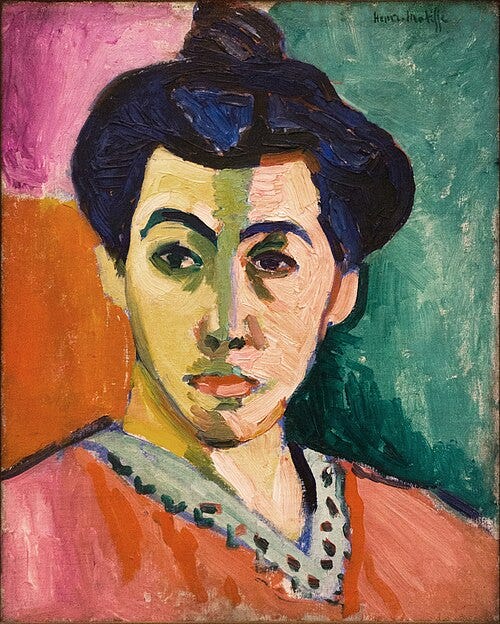
But this unnatural green has always lured, enticed, and eventually destroyed. The 19th century belonged to Scheele’s Green and Paris Green. They were hypnotizing and… based on arsenic. They finished off many Victorian aristocrats (and legend says even Napoleon, though this unusual pigment deserves a separate post). Today, we have replaced arsenic with something else, but the mechanism of attraction remains. Contemporary variations of green like:
Chartreuse (#7FFF00),
Lime (#00FF00),
Lawngreen (#7CFC00)
are edible neon. They no longer poison the body, but they effectively entice our sight.
The Bill for the Virus
According to data from the Financial Times, this one viral trend led to a shock in the global agricultural market:
- Virus: The “Dubai chocolate” format exploded after a single clip from December 2023 (~120 million views).
- Price: The prices of pistachio kernels jumped by 33% in a year (from $7.65 to $10.30 per pound).
- Shock: In a few months, Iran sent 40% more nuts to the Emirates than it previously did in an entire year.
Anatomy of the Phenomenon: Patient Zero
Sarah Hamouda (FIX Dessert Chocolatier) is considered “patient zero”. Her innovation did not come from old books, but from pregnancy cravings. She invented a bar in which she crammed pistachio cream, tahini paste, and crunchy kataifi dough. She named it “Can’t Get Knafeh of It”. It is a play on words: English “Can’t get enough”.
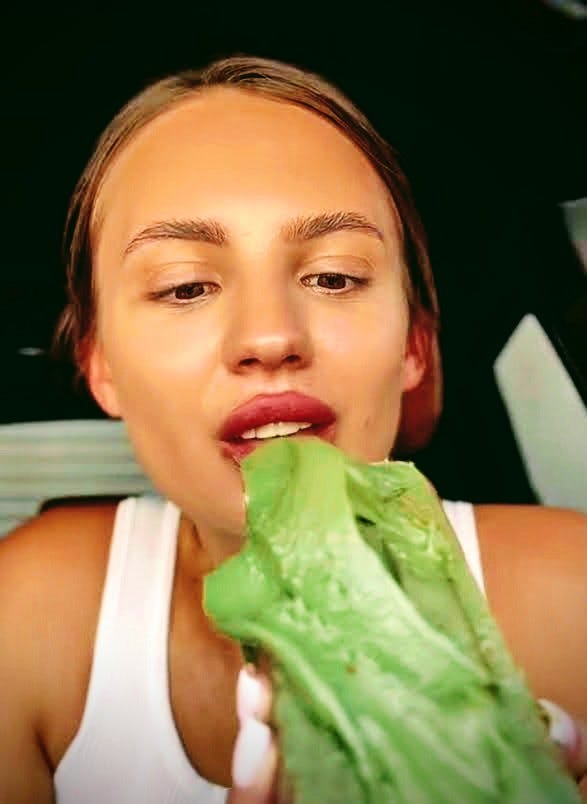
But the product would have remained only a local curiosity were it not for the super-spreader Maria Vehera. Her TikTok (ASMR in a car) triggered what the algorithm loves most: Sound and Color. Neon green spilling onto a hand. This is food pornography (food porn) in its purest form. The viewer’s brain got a shot of dopamine, and the market went crazy.
Fortress of Women: Ricotta vs Tahini
While the world fights over green goo, we are losing something more valuable. Context. Cannolo is not a “tube to be filled with whatever”. It is a cultural sign with powerful symbolism. The legend leads us to the 9th century, to the Sicilian Qalʿat an-nisāʾ (“Fortress of Women”). In the emir’s harem, concubines create a dessert: a tube of dough filled with white sheep ricotta. It was a homage to the ruler’s potency. A phallic form, created by women for a man. A symbol of fertility. Eros on a plate. Even when the Normans retook the island and nuns (sic!) took over the recipe, the erotic subtext survived. Sicilians sang during the carnival:
“Lu cannolu è la virga di Mosè”
(Cannoli is the staff of Moses).
Real cannoli required engineering and respect:
- The dough had to have blisters like Moon craters (the effect of adding Marsala wine).
- They were fried in lard, not oil.
- They were filled with fresh ricotta, not nut paste.
Blood, Sugar, and Sex
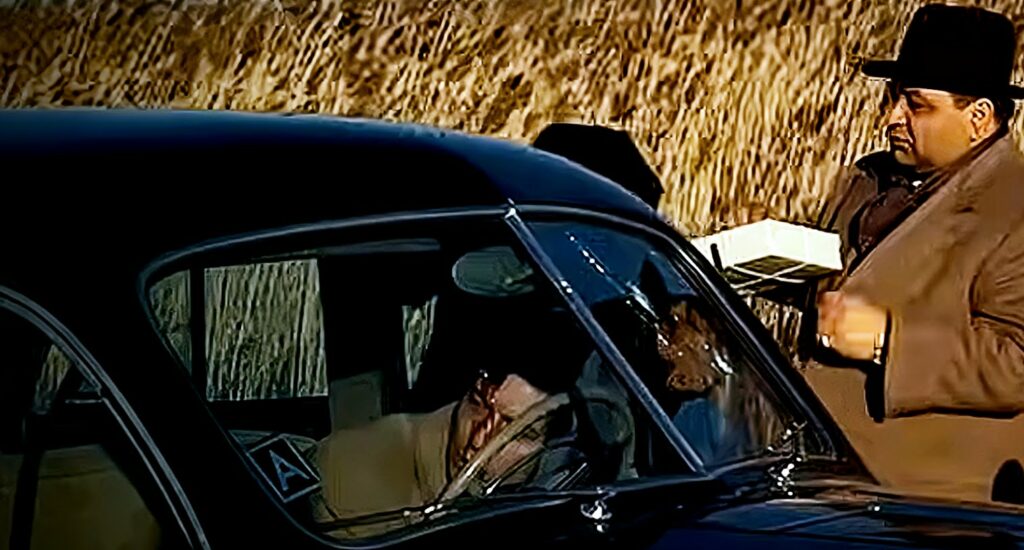
Pop culture turned cannoli into an unofficial sacrament of the Cosa Nostra. In gangster cinema, this dessert was never just a “sweet snack”. It was the binder that connected a family feast with a brutal execution. In The Godfather, Clemenza drops the legendary line:
“Leave the gun, take the cannoli.”
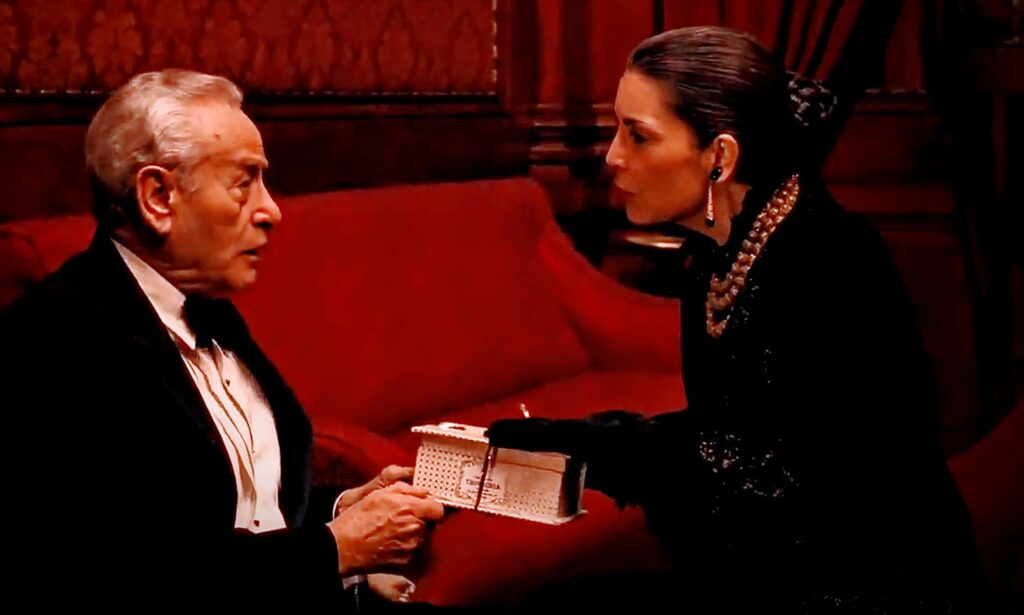
This is the alchemy of cinema. Murder and dessert. Blood and sweetness. Cannolo was the link there between the brutal world of the mafia and the warmth of the hearth. In the third part of the saga, cannolo returns as a “poisoned treat”, which kills Don Altobello. Eros changes into Thanatos (death).
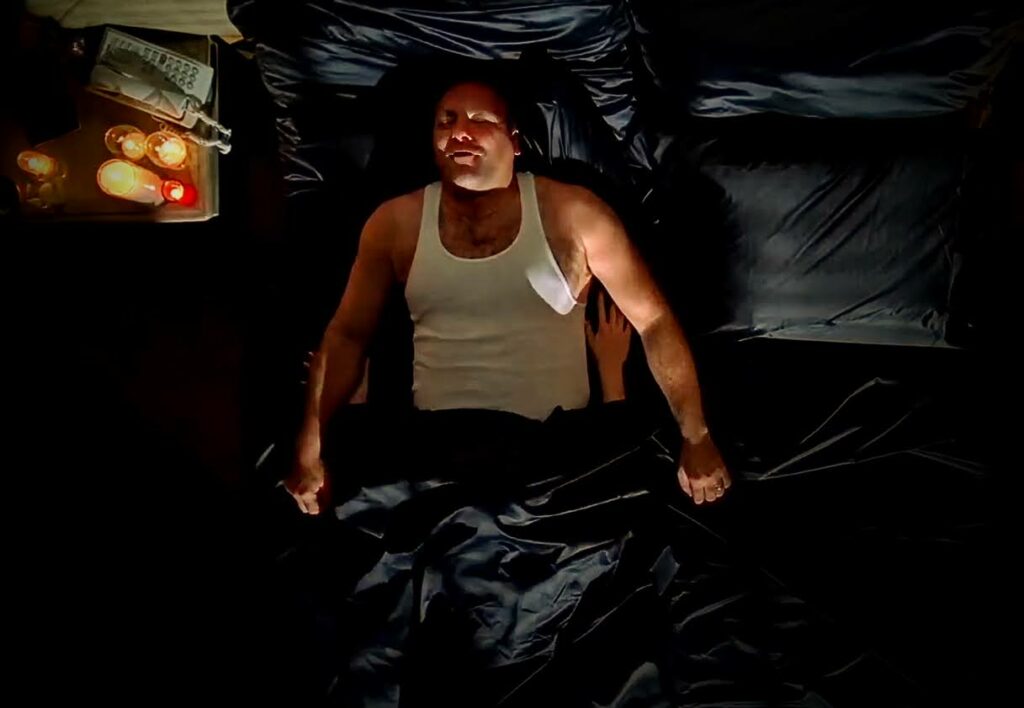
But the final dropping of masks occurs in The Sopranos. In a cult bed scene, a sentence falls that leaves no room for illusions:
“Tony, I love your cannoli.”
There is no room for guesswork here. Cannolo is body, passion, and life.
The Loop of History
Today, picking up “Dubai-style Cannoli” from a discount store, we are holding evidence of a crime in our hands.
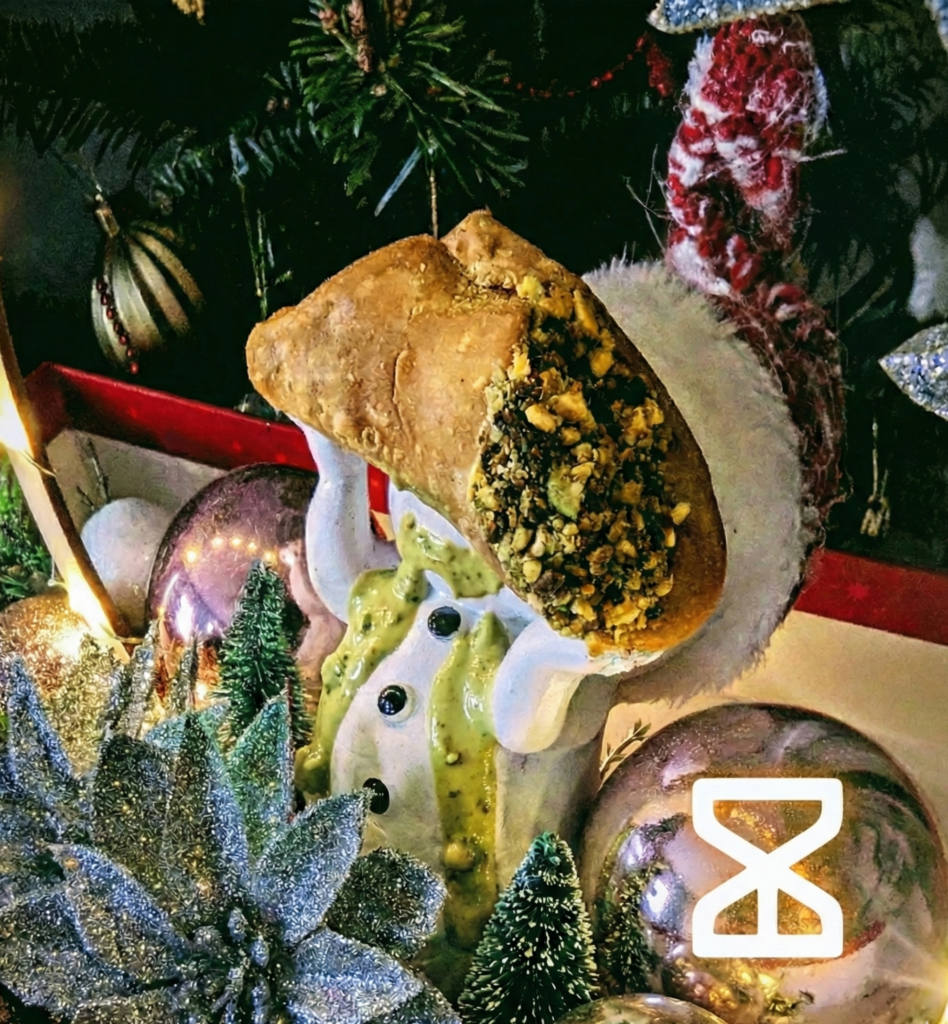
History has come full, ironic circle. In the 9th century in the “Fortress of Women”, Arab concubines created a dessert to pay homage to male power. They put soul and symbolism into it. In the 21st century, another woman with Arab roots, Sarah Hamouda, created a dessert that became a homage to the algorithm. She put crunch and photogenic green color into it.
We castrated history. We swapped the symbol of fertility and death for a symbol of status and social likes. Dolce vita to dolce viral.
Discussion about this post
When Showing Is Better Than Hiding: The Bold Strategy of Dazzle Camouflage
May 14•szczerski
Rosalía’s “Berghain” – An Alchemical Ritual of Transformation
Decoding the alchemical symbolism in Rosalía’s ‘Berghain’ – from Nigredo to Rubedo
Nov 2•szczerski

Matter & Engineering, Civilization & Transformation
Dec 10•szczerski
1
© 2025 szczerski · Privacy ∙ Terms ∙ Collection notice
Start your SubstackGet the app
Substack is the home for great culture
Cookie Policy
We use cookies to improve your experience, for analytics, and for marketing. You can accept, reject, or manage your preferences. See our privacy policy.
Leave a Reply