In a world optimized for convenience and lightness, an old metal trash can seems like a system error. But if we connect the dots between literature, physics, and data, it turns out we are the ones mistaken, not the “backward” neighbor.
1. Starting Point: Howard and the Vacuum Tube
I recently finished reading Stephen King’s Fairy Tale. One of the characters, Howard Bowditch, loved everything old. In a world of massive, flat 8K screens, he stuck with his Zenith TV with “rabbit ears” antennas. Instead of replacing the TV with a new one, he simply went to the store, ordered vacuum tubes, and replaced them himself when they burned out.
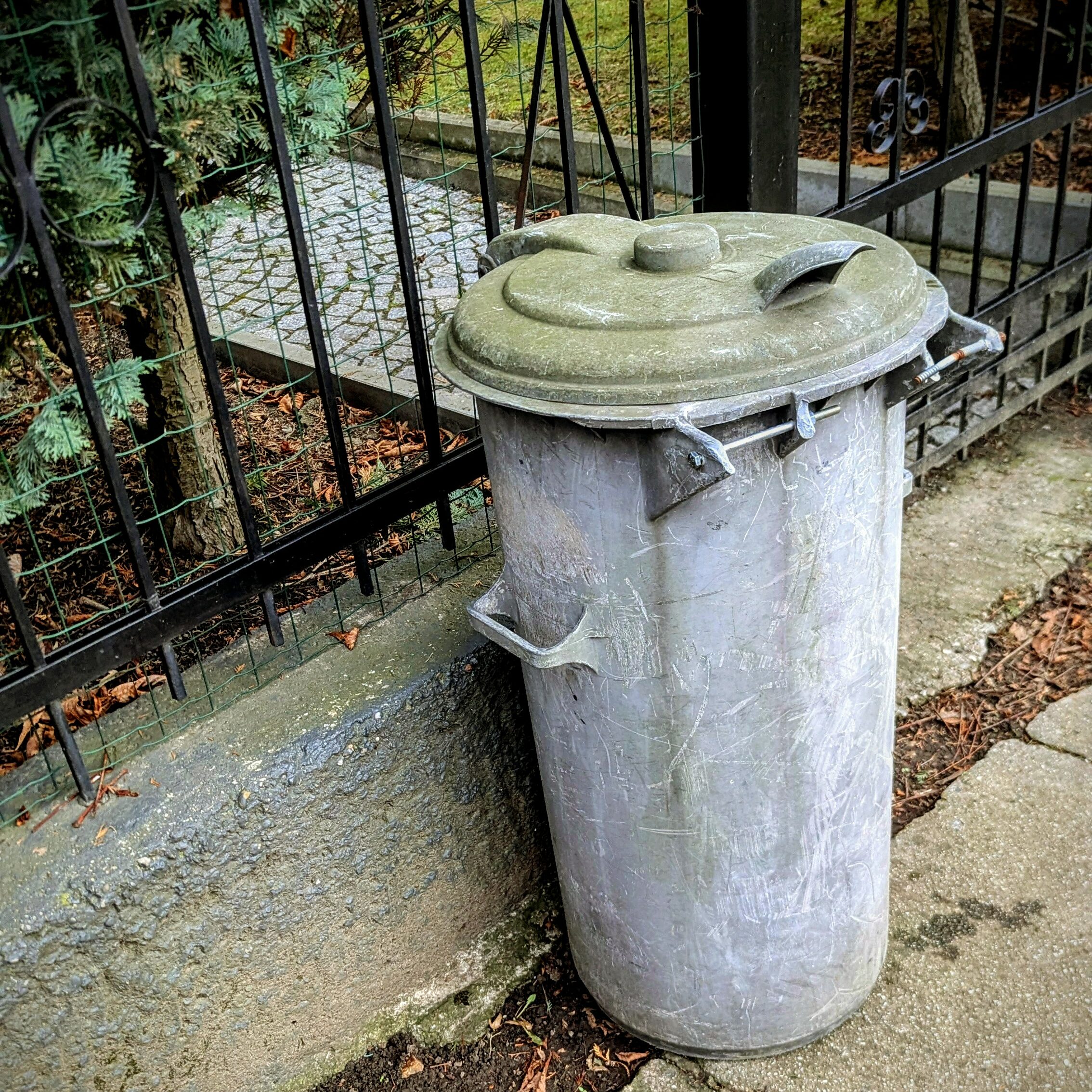
Walking through a neighborhood of single-family homes today, I saw a physical manifestation of this attitude. In a sea of identical plastic bins stood it – an old, metal trash can.
The original trash can I saw on the street
2. Network of Connections: The Cultural Graph
For me, as a cultural analyst, this bin isn’t just a container for waste. It is a node in a network of associations. Looking at this rusty cylinder, I see a whole map of cultural references that merge into a single story about resistance against mediocrity:
The Philosophy of the Hammer: I see in it the protagonist of Fredrik Backman’s A Man Called Ove. Ove trusted only those things he understood and could fix with a hammer and a monkey wrench. A metal bin is exactly that kind of object – you can hammer out a dent, weld a broken handle. Plastic simply cracks.
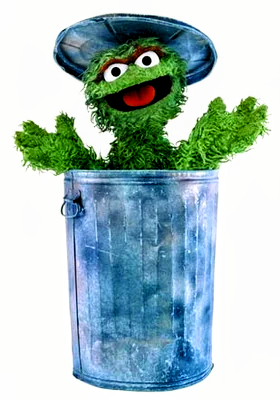
Iron Age vs. Plastic Age: Metal has been with us for millennia – from the first bronze tools to the Industrial Revolution. The mass production of plastic is merely a blink of an eye in the history of civilization. That is why in the cartoons of our childhood, like Top Cat or Sesame Street, the metal garbage can was a natural element of the landscape. It is a relic of a pre-polymer world, which we remember as more solid and tangible.
Golden Age Syndrome: This is the same mechanism that drove Gil in the movie Midnight in Paris. The belief that another era was more authentic, and objects (and times) had a different “gravitas” than today’s plastic shoddiness. This bin is a ticket to times that, in our imagination, were more solid.
Rejecting the Arms Race: Finally, this bin is the equivalent of the camera used by the Japanese master of photography, Daidō Moriyama. While the world fights over megapixels and sharpness, he takes genius, grainy photos with an old, cheap compact camera. This trash can is just such a compact – technically “worse,” but with a character that cannot be faked.
3. Hard Data: Physics and Matter
But let’s put culture aside for a moment. Let’s look at this object with the cold eye of an analyst. This “backward” bucket beats modernity through pure engineering:
Cylinder Geometry: Why is it round? It’s not a coincidence. From a physics standpoint, a cylinder distributes stress perfectly. There are no corners – i.e., weak points where plastic most often cracks.
Fire Resistance: Steel melts at temperatures above 1400°C. If you throw hot ash from a fireplace into a plastic bin, all that remains is a puddle. A metal bin takes that heat without blinking.
Acoustics: Metal has a “voice.” It resonates. Throwing trash in creates a specific sound – an interaction with matter. A plastic bin sounds hollow, like a shot from a suppressed gun.
4. Life Cycle: How does a trash can die?
The most important conclusion, however, comes from analyzing what happens at the end. Let’s compare the Life Cycle Assessment (LCA) of both materials:
The conclusion is paradoxical: The steel bin is greener precisely because it dies faster and with dignity. It rusts, turns to dust, and vanishes. The plastic bin becomes immortal zombie-waste that poisons the environment for centuries.
5. Summary
Maybe we chuckle at old men like Ove and their attachment to things that can be fixed with a hammer. Maybe we are too comfortable accepting ubiquitous disposables.
A skeptic would say we have fallen into a trap of our own minds. Psychology has a whole dictionary of labels for this:
Declinism: The belief that the past was wonderful, and the present is a slippery slope and the decline of civilization. That’s why we cling so tightly to this rusty relic – as proof that “things used to be better.”
Rosy Retrospection: A cognitive bias through which we idealize past times. We remember the “noble solidity” of metal, but wipe from memory how damn heavy that bin was and how much noise it made at 6 AM.
Retromania: Our cultural obsession with archiving and reenacting the past instead of creating something new.
Anemoia: And in the case of my generation, it is often a nostalgia for times we never experienced. We feel a sentiment for the age of steel and the atom, knowing it only from the aesthetics of old movies.
But are these definitely just cognitive biases? Or maybe our intuition, breaking through all these psychological definitions, is trying to tell us something important? That in a world of plastic, we lack gravity.
History will judge our actions. Let us be thankful for this anomaly in the urban structure. For the fact that not everyone chose the chase for the annual smartphone premiere or a higher number of “K”s in their TV resolution.
Maybe the cure is, paradoxically, AI? Perhaps artificial intelligence will do the majority of the boring, digital work for us, and we – tired of virtuality – will return as humanity to the tangible. To natural craftsmanship, to fixing things with our own hands, and to materials that age with dignity, before plastic finally finishes us off.


Leave a Reply